The petition you see on Change.org is far more than a formal objection, it’s a public declaration of concern by those who have built Bermuda’s taxi and public transport industry from the ground up. By signing, operators and members of the public service vehicle (PSV) community confirm they reject the introduction of seasonal or private ride-share licences without proper consultation, transparency, and financial impact analysis.
The petition safeguards several critical elements of the island’s transportation sector:
- Protection of decades-long personal investment in taxi permits.
- Prevention of permit devaluation, which would undermine operators’ livelihoods.
- Demand for enforcement against unregulated operators, who currently operate outside the law.
- A push for transparent, locally controlled dispatch alternatives, like the BTOA’s own app, BTOA Connect, rather than external ride-hailing platforms like Uber, Lyft, or Bolt.
The Stakes Are High:
In short, this petition is a collective effort to give the BTOA a clear, authoritative mandate. With enough signatures, the association can present a unified front to government, media, and regulators, showing that many are ready to stand together to protect Bermuda’s transport future.
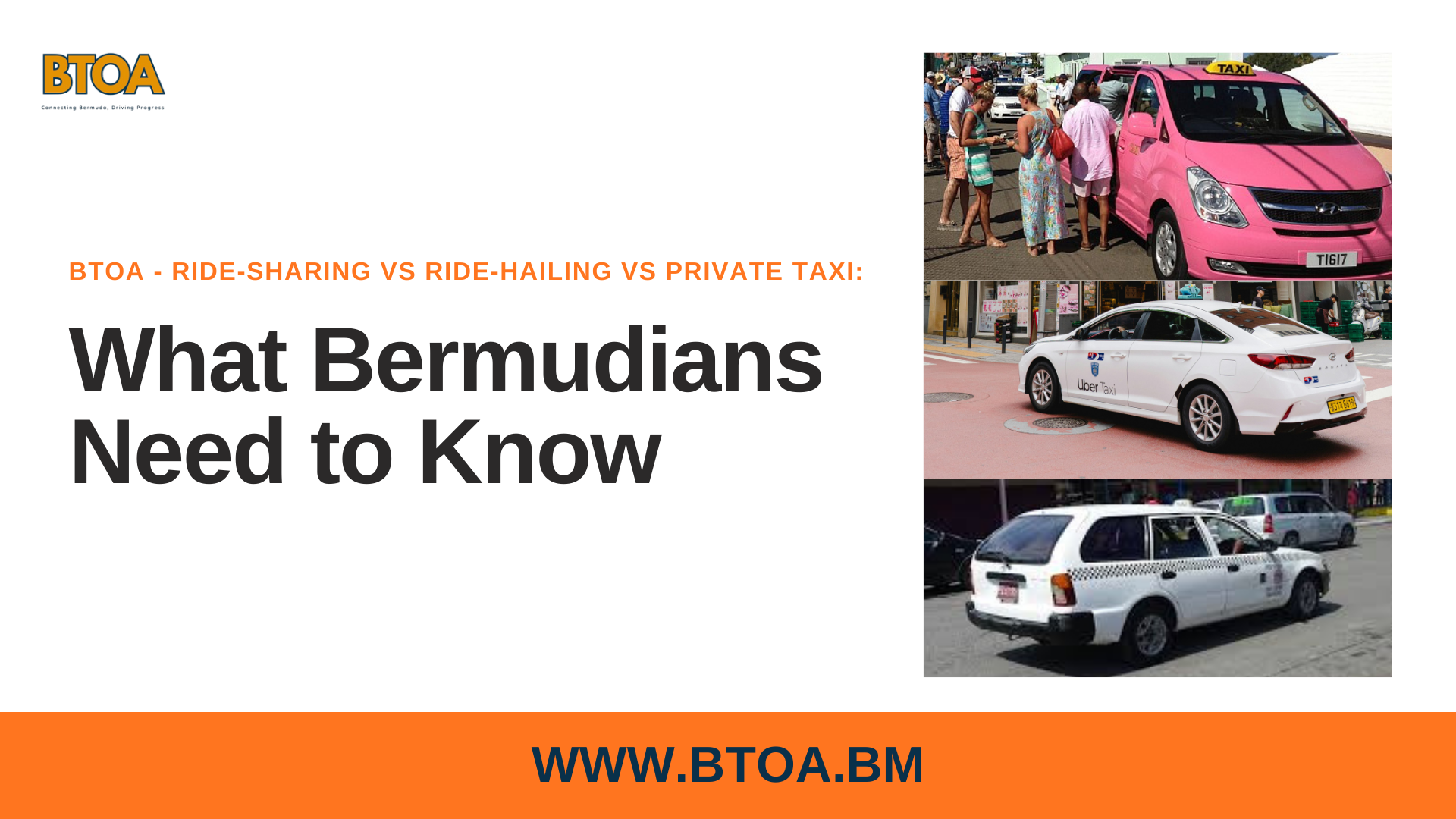
The Risks of Unregulated Ride-Share, What We Already Know from BTOA’s Research
The BTOA has repeatedly laid out why ride-sharing, especially using private vehicles, poses serious problems for Bermuda. Below are the core concerns, grounded in public reporting and BTOA statements:
1. Safety & Legal Compliance
- Privacy, regulation, and accountability, cornerstones of the taxi model, are often lacking in ride-share proposals. BTOA argues that allowing private cars to pick up passengers under ride-share licences sets a “dangerous precedent.”
- Taxis in Bermuda are licensed under the Motor Car Act, inspected regularly, must carry liability insurance, and are driven by vetted professionals.
- By contrast, ride-share and ride-hailing models globally have sometimes resulted in increased traffic accidents, with limited protections for passengers and no guaranteed access to insurance or legal recourse.
These differences are not trivial: they reflect the safety and service standards that have upheld Bermuda’s reputation in tourism and transport for decades.
2. Economic Fairness and Protection of Investments
- The proposed cost for ride-share permits was reportedly as little as US $1,000, a fraction of what existing taxi permits cost.
- Such a low barrier to entry undermines decades of investment by regular taxi owners and could substantially devalue their permits, those permits are not just licenses but often equity held as collateral.
- The BTOA warns this would create an “unfair playing field,” favoring newcomers with cheap permits over established operators who have invested in vehicles, insurance, training, and compliance.
3. Threat to Industry Stability and Quality Standards
- Introducing unregulated ride-share could erode the service quality, safety, and reliability that passengers expect from taxis. The BTOA has emphasized that taxis aren’t just transport, they are part of Bermuda’s hospitality and public service heritage.
- The existing legal framework, the Motor Car Act 1951, does not accommodate ride-sharing driven by private vehicles. The BTOA insists that until modern legislation is enacted, Bermuda cannot responsibly integrate ride-share or ride-hailing services.
- Weak enforcement against illegal and unregulated operators already exacerbates these risks. Without stronger oversight, ride-share apps could proliferate unchecked, undermining both safety and market fairness.
The Bigger Picture, What’s at Stake for Bermuda?
The debate isn’t just about taxis vs apps. It’s about what kind of transportation ecosystem Bermuda wants to build:
- Tourism & Reputation: Taxis are often the first point of contact for many visitors. Professional, regulated taxi services operated by experienced drivers support tourism by offering consistent, safe, and welcoming transport. Eroding that standard risks long-term damage to Bermuda’s tourist experience.
- Local Economy & Livelihoods: Many taxi owners and drivers rely on their permits to sustain households, serve communities, and invest in their businesses. Devaluing those permits could lead to job losses, economic instability, and even financial hardship for families who depend on the industry.
- Safety & Accountability: A regulated system ensures minimum standards for vehicle safety, driver training, insurance, and liability. Without that, there is no guarantee that ride-share drivers will meet those standards, putting passengers at risk.
- Respect for Legal & Institutional Order: The Motor Car Act 1951 was established to regulate public service vehicles; bypassing that framework without proper legislative reform undermines both the rule of law and the integrity of the transport system.
Why Signing the Petition is a Concrete Step You Can Take
This petition isn’t just symbolic, it’s a strategic tool for building momentum. With a solid number of signatures, the BTOA can:
- Show government, Members of Parliament, and the media a clear, unified front. They can no longer ignore the voices of operators, drivers, and industry stakeholders.
- Push for a formal economic impact assessment before any ride-share licensing is approved.
- Demand transparency in how ride-share apps operate in Bermuda, including who owns them, how they charge riders, and how their earnings flow.
- Advocate for locally driven solutions, such as BTOA Connect, a dispatch model owned by drivers, which keeps control and revenue within the local PSV community.
- Call for stronger enforcement against illegal, unregulated transport operators.
By signing, you’re not just saying “no” to ride-share, you’re saying “yes” to a fair, transparent, and sustainable transport future for Bermuda.
What We Are Asking of Government and Regulators
Through this petition and through collective advocacy, the BTOA demands that the Government (Parliament and relevant agencies) must:
- Protect existing taxi permits and ensure no devaluation.
- Halt any plans for seasonal or private ride-share licensing until a full economic impact study is completed and industry stakeholders consulted.
- Require full transparency from ride-share apps (ownership, fees, operations) before they are allowed to operate.
- Support a driver-owned, island-based dispatch model (like BTOA Connect) keeping wealth, control, and accountability within the local PSV community.
- Crack down on illegal and unregulated transport services to ensure passenger safety and preserve respect for the law.
For Operators, Drivers, Residents, Visitors
Whether you’re a taxi owner, a driver, a regular resident, or a visitor who cares about Bermuda’s future, your support counts.
- Sign the petition to help build a unified industry mandate.
- Share it widely, with fellow drivers, residents, tourists anyone who values safe, regulated, and fair transport on the island.
- Stay informed and engaged, urge the Government to publish any proposed legislation, white papers, or impact assessments before moving forward with ride-share.
This isn’t just about taxis vs ride-share. It’s about protecting a vital part of Bermuda’s social and economic fabric, ensuring that our transport industry remains safe, professional, and fair for decades to come.
By standing together, we can protect the investments, livelihoods, and safety that we all depend on.